A child should be able to focus on being a child: playing with friends, learning something new, or deciding which bedtime story to read. For children navigating abuse, neglect, and domestic violence, those everyday moments can be overshadowed by worry about their own safety or the safety of someone they love.
October is Domestic Violence Awareness Month, an opportunity to recognize survivors’ experiences and better understand how domestic violence intersects with the abuse and neglect children have experienced.
For the children we serve, abuse or neglect may come first, or domestic violence may precede it. A nationally representative study published in 2010 found that children who witnessed domestic violence were nearly four times as likely to experience abuse or neglect in the same year compared with children who had not witnessed it.
At Canopy Center, this issue reaches across our programs. Among the children we serve, domestic violence has been identified as a factor in:
- CASA of Dane & Columbia Counties: 19% of children
- Parent to Child (P2C): 100% of children
- Oasis Mental Health Clinic: 8% of children
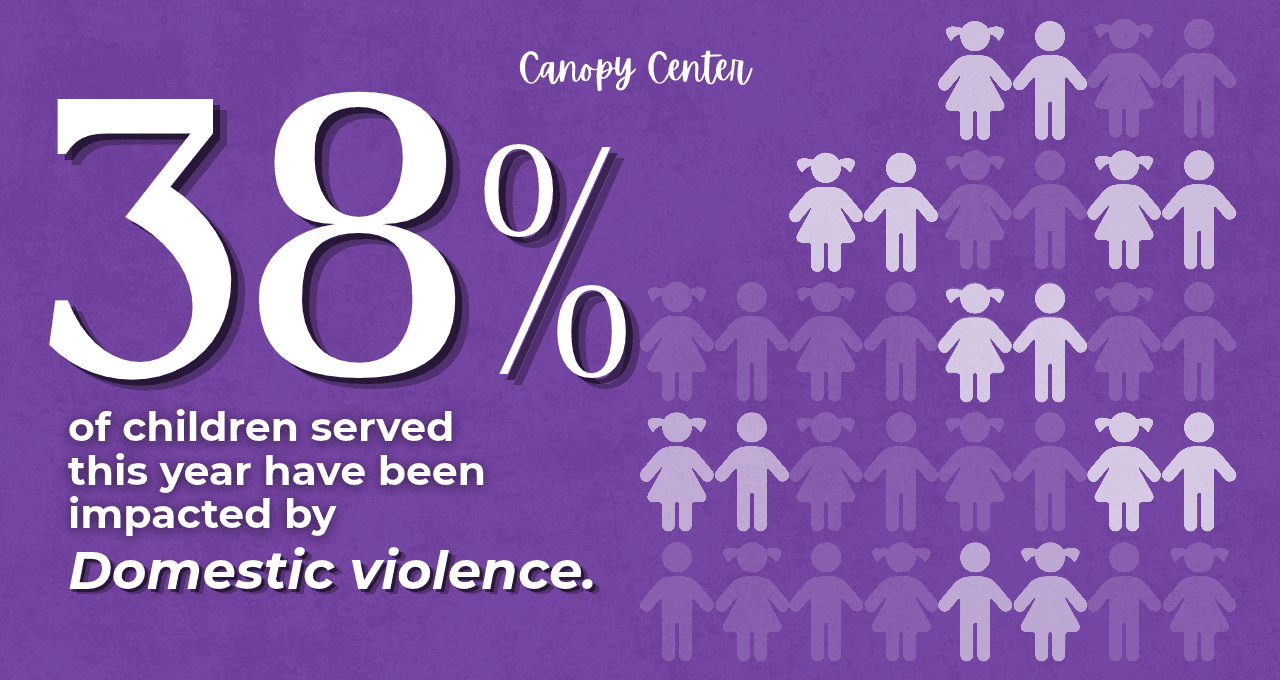
Agency total: 38% of children served this year have been impacted by domestic (partner) violence
Last week, Canopy Center attended the Wisconsin Summit on Domestic Violence and Child Welfare: Intersection and Action. Organized by the Wisconsin court system’s Children’s Court Improvement Program and Office of Court Operations, the summit brought together court, child welfare, child advocacy and domestic violence service professionals to improve responses when these issues overlap.
One eye-opening exercise asked us to navigate a survivor’s choices as money, housing options, and support from others became increasingly limited. Each decision carried costs. As resources dwindled and places to turn became unavailable, participants faced fewer and fewer options.
The experience brought into focus how quickly options can disappear—and why leaving an abusive relationship is rarely a simple decision. Seeking safety can involve financial barriers, housing instability, threats, and the strain of repeatedly asking others for help. Understanding those barriers helps us respond with compassion rather than judgment.
Court involvement alone cannot meet every need a family faces. Domestic violence can remain hidden, and its effects may not be fully understood even when a family is involved with child welfare or the courts. Nonprofits play an essential role alongside these systems - building trust, offering consistent support, and helping families navigate barriers to safety.
For Canopy Center, that means listening carefully, collaborating with others involved in a family’s life, and keeping children’s safety and experiences at the forefront.
How CASA Can Help
For children involved in the child welfare system, a Court Appointed Special Advocate can be a consistent adult in a child’s life, helping ensure their voices, and their needs, inform decisions about their lives. CASA volunteers can:
- Be a dependable presence. Build a relationship through regular contact, offering consistency during a time of uncertainty.
- Listen to the child’s perspective. Help ensure the child’s experiences, wishes, and concerns are heard alongside the information adults share.
- Advocate for needed support. Work with the child’s team to identify needs and advocate for services, including mental health care and support at school.
- Keep attention on safety and well-being. Gather information from people involved in the child’s life and provide recommendations to help the court make informed decisions.
A CASA volunteer helps bring attention to how the child is doing, what concerns remain, and what support is still needed.
How Parent to Child Can Help
When supervised visitation is appropriate, Parent to Child provides structure and support for parent-child contact, with children’s safety and well-being as the priority. For families affected by domestic violence, this can include:
- Safety procedures tailored to the family. The visiting parent and primary caregiver’s arrival and departure are planned with consideration for domestic abuse concerns, court orders, and restrictions on contact between parents.
- Support for positive interactions. Family Interaction Specialists offer guidance that helps parents respond to their children’s needs and engage in appropriate activities together.
- Objective documentation. FIS and staff record visit observations so those involved in the case have information about what occurred.
These measures help keep the focus on the child’s experience while providing clear expectations for parent-child contact.
Children affected by abuse, neglect, and domestic violence need adults who listen, recognize their needs, and follow through. Parents who have experienced domestic violence need support that recognizes how closely their safety and their children’s safety are connected.
This October, we invite our community to learn more about domestic violence and the local organizations supporting families. By volunteering, giving, or helping others understand this issue, you help sustain the relationships and services children depend on.
Need support? Contact the National Domestic Violence Hotline at (800) 799-SAFE (7233). In the Madison area, contact Domestic Abuse Intervention Services (DAIS): call (608) 251-4445 or text (608) 420-4638.