Earlier this month, Canopy Center opened its doors for a behind-the-scenes look at the people, programs and spaces that help children and families heal.
The open house also marked a new investment in the future of Canopy Center’s family-centered care.
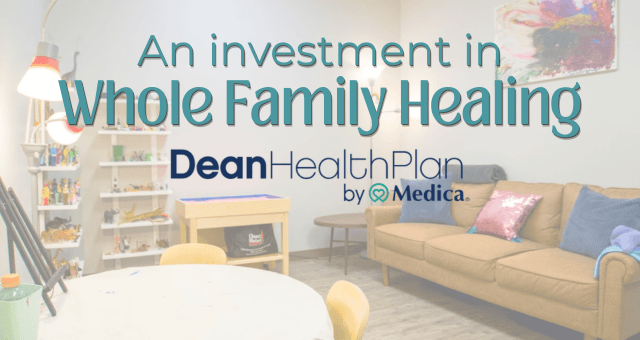
Dean Health Plan by Medica announced a $152,000 multi-year investment to expand family-centered mental health care through Canopy Center’s Oasis Program. The funding will help implement a multisystemic approach to therapy that supports children and caregivers, together - strengthening families and improving outcomes over time.
A Space Designed with Children in Mind
For those who attended the open house, the impact of Canopy Center’s work could be seen in the details.
At the front desk, Ann Marie welcomed guests into the space. Down the hall, artwork, messages of inclusion and pieces of Canopy Center’s history filled the walls. Throughout the office, staff and volunteers explained how different spaces and materials help children feel comfortable, build trust and express themselves.
In one treatment room, Mwezi, one of Canopy Center’s Oasis therapists, demonstrated how Sand Tray Therapy can help children and caregivers communicate experiences or emotions that may be difficult to put into words.
For Mwezi, an important part of the healing process is giving children room to move through their emotions.
“I think giving kids the space and the autonomy to have their own voice and understand their own hurt is super important,” Mwezi said.
That patience becomes especially important as children grow.
“Healing is not linear,” Mwezi said, noting that children continue to process their experiences differently as their brains develop.
A child may understand an experience one way when they are young, then return to it differently as they grow, form new relationships and learn more about themselves and what they experienced. For some children, that means returning to therapy at another stage of life.
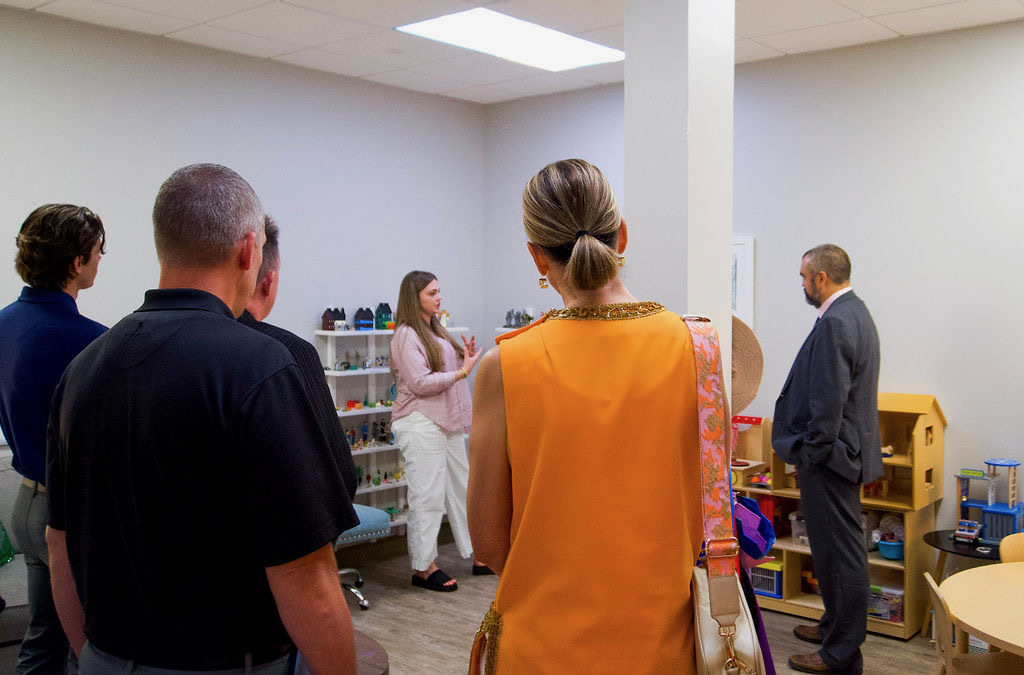
Mwezi demonstrates a play therapy technique for guests during the Media Open House.
Supporting More Than The Child
The multisystemic approach to therapy will allow Oasis to provide more comprehensive support for caregivers alongside the specialized trauma treatment offered to children.
For families navigating the impact of abuse, caregivers often need a place to process, learn and receive support, too.
Mwezi sees the difference that can make from a child’s perspective.
“Kids are so proud of this space and enjoy being here,” she said. “I think they get excited when they notice, ‘Oh, mom gets to come talk to somebody, too.’ That’s amazing.”
This approach recognizes that caregivers are essential to sustaining the progress children make during treatment. Their involvement is not simply a complement to treatment; it is a foundation for its success.
Seeing The Full Picture
While the open house celebrated Dean Health Plan by Medica’s investment in the Oasis Program, visitors also had the opportunity to learn how Canopy Center’s other programs promote safety, advocacy and healing.
Staff from the CASA of Dane & Columbia Counties Program shared how trained volunteers advocate for the best interests of children who have experienced abuse or neglect while navigating the foster care and court systems. Parent to Child volunteers explained how the program supports families that require supervised visitation and offered tours of Canopy Center’s home-like visit rooms.
Materials used in local schools to spark conversations about consent and healthy relationships were also on display, offering a glimpse of how Canopy Center’s work extends beyond the walls of its office.
Throughout the morning, the event became as much an opportunity for connection as it was for learning. Staff members, volunteers, board members and longtime supporters caught up with one another as they moved through the halls. Many shared a connection to Canopy Center’s work but do not often have the opportunity to gather in the same room.
Visitors repeatedly remarked on how intentionally the treatment spaces were designed to feel welcoming and comfortable for children.
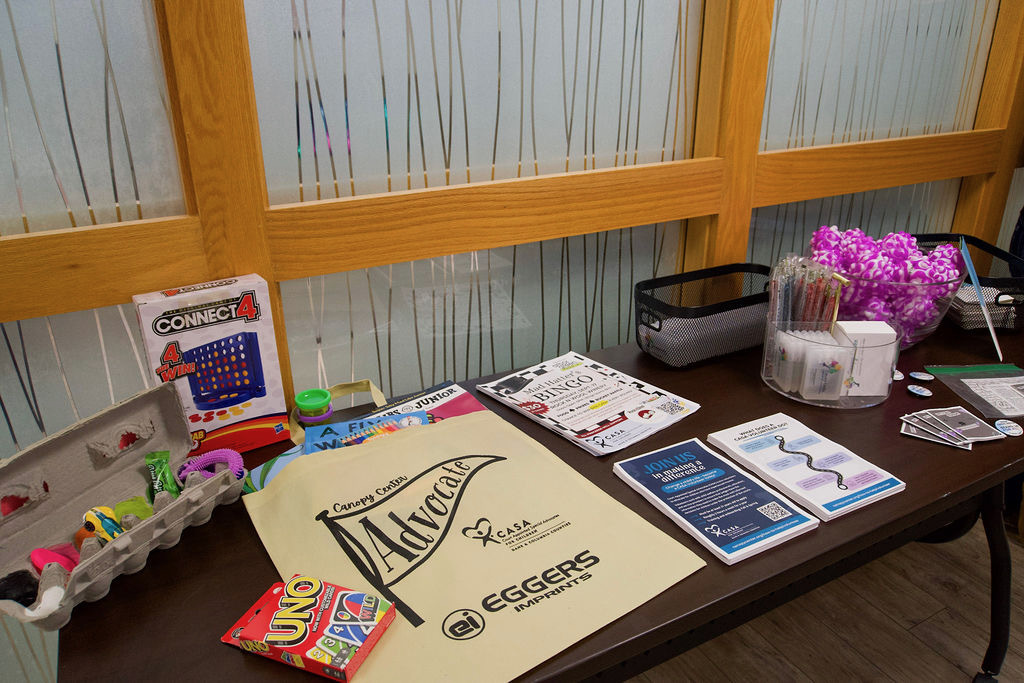
Examples of the tools, activities and resources CASA uses to connect with children, families and the broader community.
Investing in Healing Together
Near the end of the open house, guests gathered in Canopy Center’s lobby as Executive Director Sarah Berndt and Josh Gustafson, Wisconsin Market President for Dean Health Plan by Medica, spoke about the investment and the work it will make possible.
Sarah shared how the funding will help Canopy Center build capacity, train clinicians and expand services for both children and caregivers.
When children have a safe space to heal—and caregivers have the tools and support to help them—families are better equipped to move forward together. Dean Health Plan by Medica’s investment will make that support available to more families.
Its impact will extend beyond those receiving services, helping build a healthier community for everyone.
“It’s good for our entire community,” Josh said.
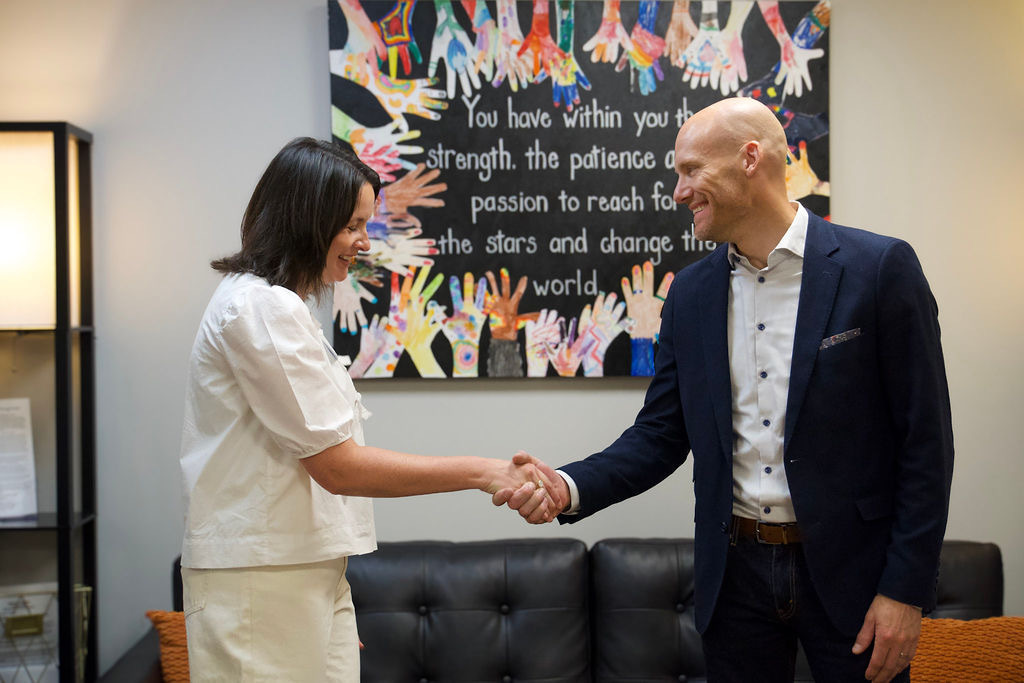
Sarah Berndt, Executive Director of Canopy Center, and Josh Gustafson, Wisconsin Market President for Dean Health Plan by Medica, celebrate the $152,000 investment supporting whole-family healing through Canopy Center’s Oasis Program.