Lately, it feels like every week there’s a news story about grooming, exploitation or child sexual abuse material. While new and existing legislation aim to address these issues, gaps in systems meant to protect children still exist. For example, in one of these recent news stories The Cap Times identified that the Madison school district has “no written policy prohibiting educators from texting students with their personal devices, which advocates and researchers have long urged to help protect children from grooming.”
In response, we want to share some guidance on how families and trusted adults can help keep young people safe on their phones and online.
You’ve heard it before - but one of the best things we can do is have open, honest conversations with young people about what grooming can look like, give them things to look for, and let them know which trusted adults they can turn to if they feel unsure about something they’re experiencing online.
Traditional “stranger danger” messaging doesn’t reflect how young people experience the world online today. Today’s young people often feel like they know someone after talking to them online.
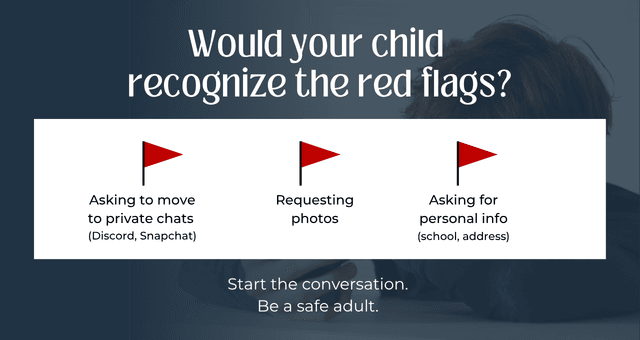
Some red flags:
- Asking to move to private chats (Discord or Snapchat)
- Requesting photos
- Asking for personal information (school, address)
Just as we wouldn’t hand a child the keys to a car without teaching them how to use it safely, we also need to equip young people with the tools to navigate online spaces. One resource our CASA staff often recommend is NetSmartz, created by the National Center for Missing & Exploited Children (NCMEC), which offers age-appropriate tools for discussing online safety.
We can’t talk about online grooming without mentioning sextortion - a serious form of blackmail where someone threatens to distribute private, explicit images or videos of a victim. It is important that if a young person finds themselves in this situation they know:
- They are not alone.
- Help is available.
- Their life is not over.
Youth, families and others can reach out to NCMEC, as well as law enforcement. NCMEC has trained professionals available who support families through every step of the response process.
For the children and youth we serve, our CASA volunteers are trained to initiate conversations about safety and to take a harm-reduction approach. This approach recognizes that young people make decisions for a variety of valid reasons. Rather than focusing on “right” or “wrong,” harm reduction supports young people in thinking critically about their experiences, feelings, and options—with safety as the priority. When a person feels accepted for who they are and what they do - no matter how unhealthy - it allows them the freedom to consider change rather than needing to defend against it.
In practice, this might include conversations about social media use, such as:
- Which apps share location data
- How to verify whether someone online is who they say they are
- What to do if you feels unsafe or uncomfortable
At Canopy Center, our staff are also trained facilitators in the Not a Number curriculum, which helps young people recognize red flags in an engaging, age-appropriate way. We offer these 5-week groups in schools, community centers, and other youth-serving spaces. Reach out to casa@canopycenter.org if you would like to learn more or to bring this program to your organization.