At Canopy Center, our Court Appointed Special Advocates (CASA) program has seen a notable increase in the number of foster children and youth served who have experienced, or are at risk of sex trafficking. Recognizing gaps in how the system identifies and supports these youth, CASA has spent the past two years equipping staff and volunteers with the tools needed to provide specialized support and to be a voice for youth in conversations with system partners and community resources.
This work has never been more urgent. Reports of sextortion and other forms of sexual exploitation of minors have risen sharply in Wisconsin. In 2024, the Wisconsin Internet Crimes Against Children Task Force received nearly 11,000 tips - many tied to sextortion, a dramatic increase from just a few years ago.
If you’re a regular reader of our newsletter or follow us on social media, you’ve heard us talk about the impact of trafficking, particularly in Dane County. Research shows that as many as four out of five victims of trafficking have spent time in foster care. This is largely attributed to unstable living situations; emotional vulnerability; and a lack of consistent, supportive relationships which put them at greater risk of exploitation. But awareness alone isn’t enough.
Because CASA works exclusively with foster children and youth, we are uniquely positioned to make an impact. With support from our funders and community, CASA has developed an approach that combines education, early identification and support to create a safety net. Now, we’re ready to share what we’ve learned with the broader community.
Prevention Through Education: Not a Number
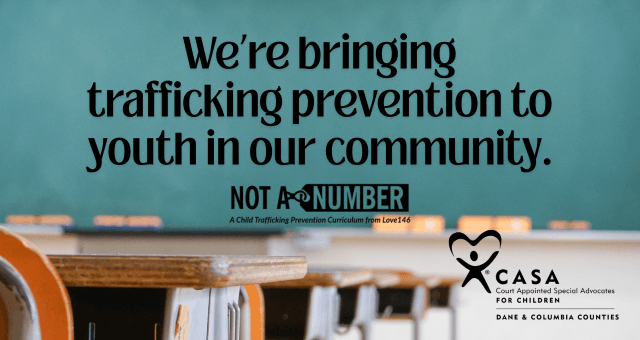
We are excited to announce that Canopy Center is now officially licensed to deliver Not a Number, an interactive, trauma-informed prevention curriculum developed by Love146.
Not a Number is an interactive child trafficking and exploitation prevention curriculum designed to provide youth with information and skills in a manner that inspires them to make safe choices. When they encounter potentially exploitative situations, youth learn to identify and utilize healthy support systems that may decrease their vulnerabilities.
This five-week program (50 minutes per session, one session per week) encourages peer-to-peer prevention, as youth often confide in one another before alerting an adult, and helps them:
- Identify healthy and unhealthy relationships
- Recognize red flags of grooming and exploitation
- Develop strategies to resist manipulation or coercion
- Locate and use community resources for support
Groups can include 8–30 young people, and sessions are delivered in ways that are developmentally appropriate, culturally responsive, and trauma-informed. This isn’t a lecture - it’s a conversation that builds awareness, resilience, and trust.
We also recognize that safe, informed caregivers are a vital part of prevention and recovery. That’s why we provide caregiver training, equipping adults with the knowledge and tools to support youth, recognize warning signs, and respond effectively.
Identifying Needs Early: CSE-IT Screening
We know that the children and youth in our CASA program are at heightened risk, so as of this summer we have begun screening every child age 10 and older, using the Commercial Sexual Exploitation-Identification Tool (CSE-IT). This nationally recognized tool helps advocates recognize warning signs, assess risk factors, and ensure that youth who may be experiencing exploitation do not fall through the cracks.
For youth who have experienced or are at-risk for sex trafficking, CASA works one-on-one to connect them with local organizations that provide trauma-informed services. These partnerships ensure that young people receive specialized care and a path toward safety when they need it most.
Young people navigating complex relationships and environments - both online and offline - deserve safe adults, clear information, and real support. We’re hopeful about what these steps mean for the children and families we serve - and for the broader effort to end child trafficking and exploitation in our community.